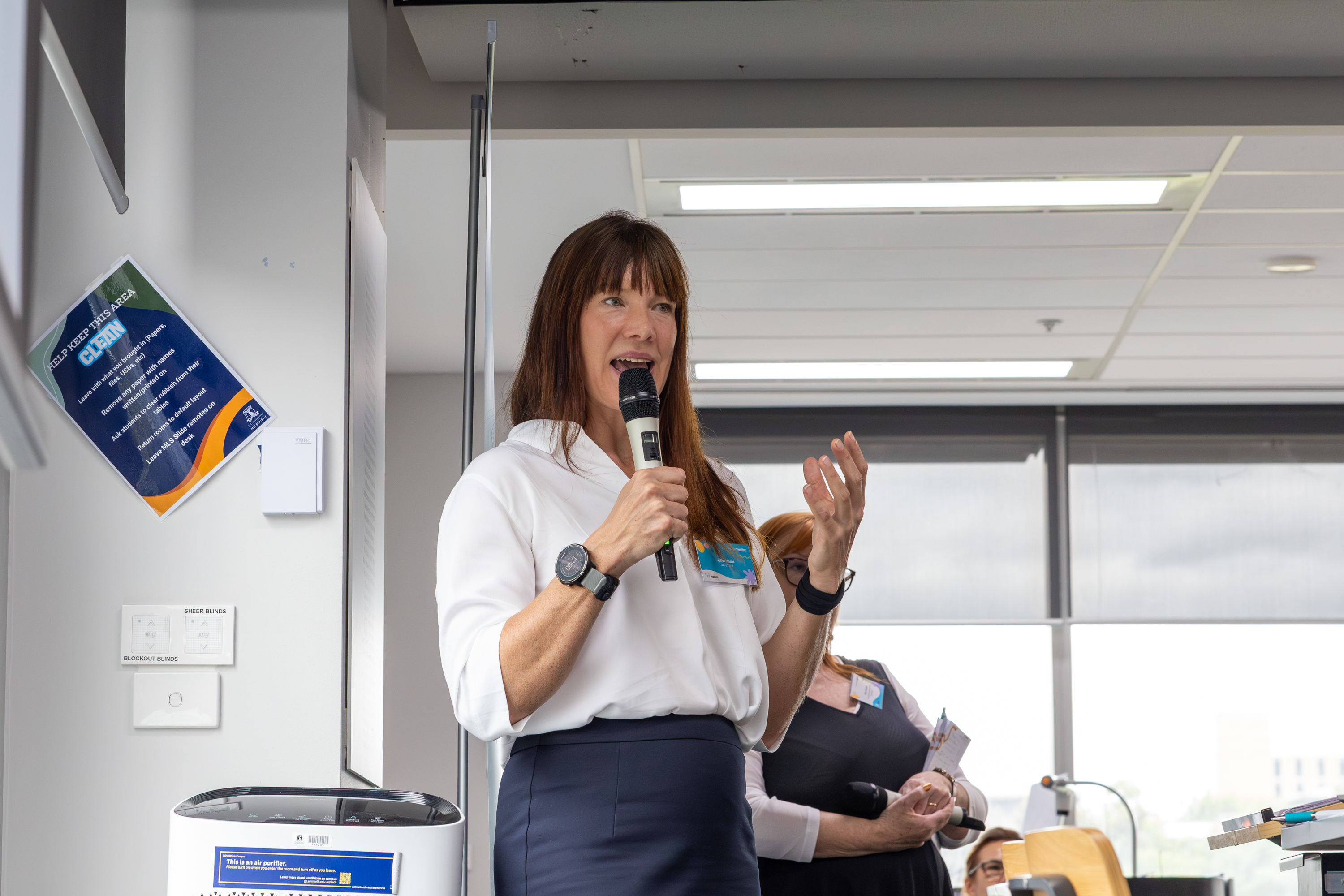
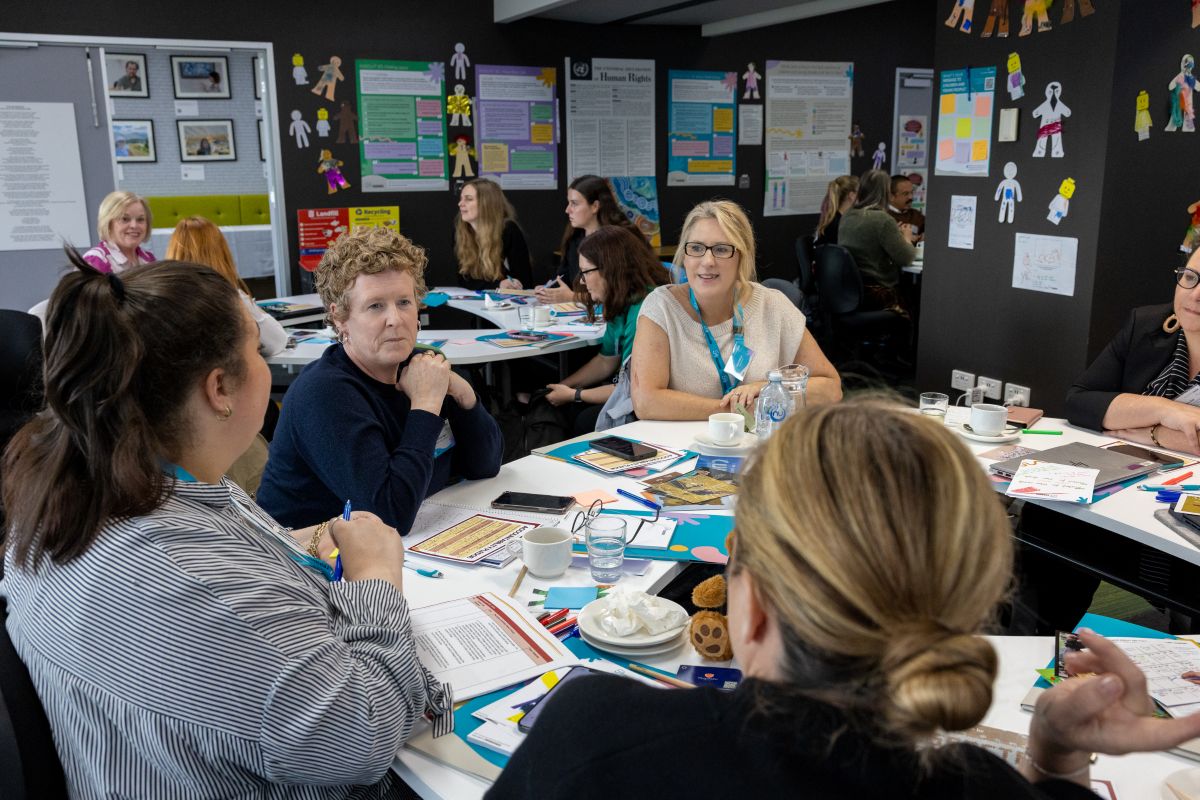
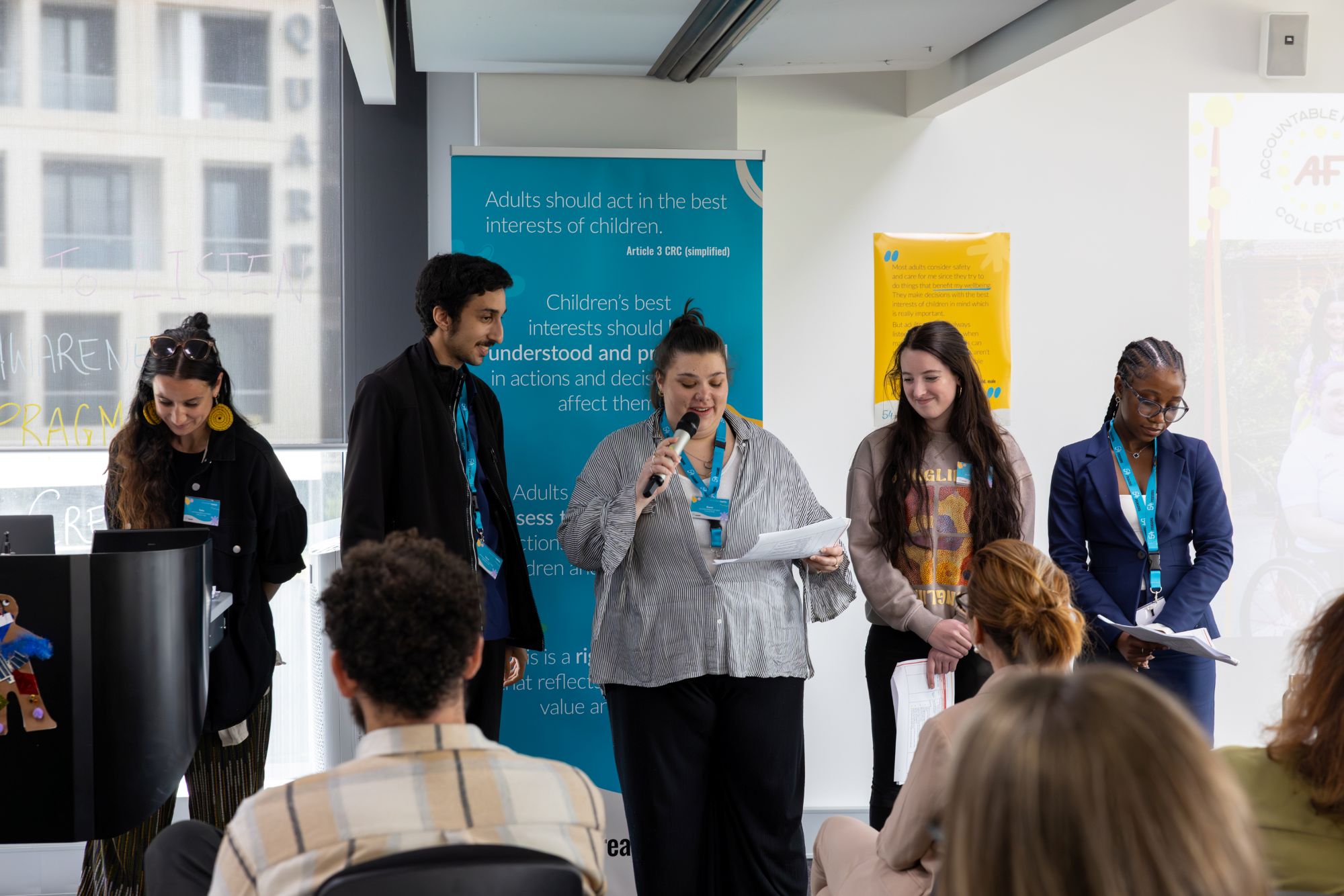
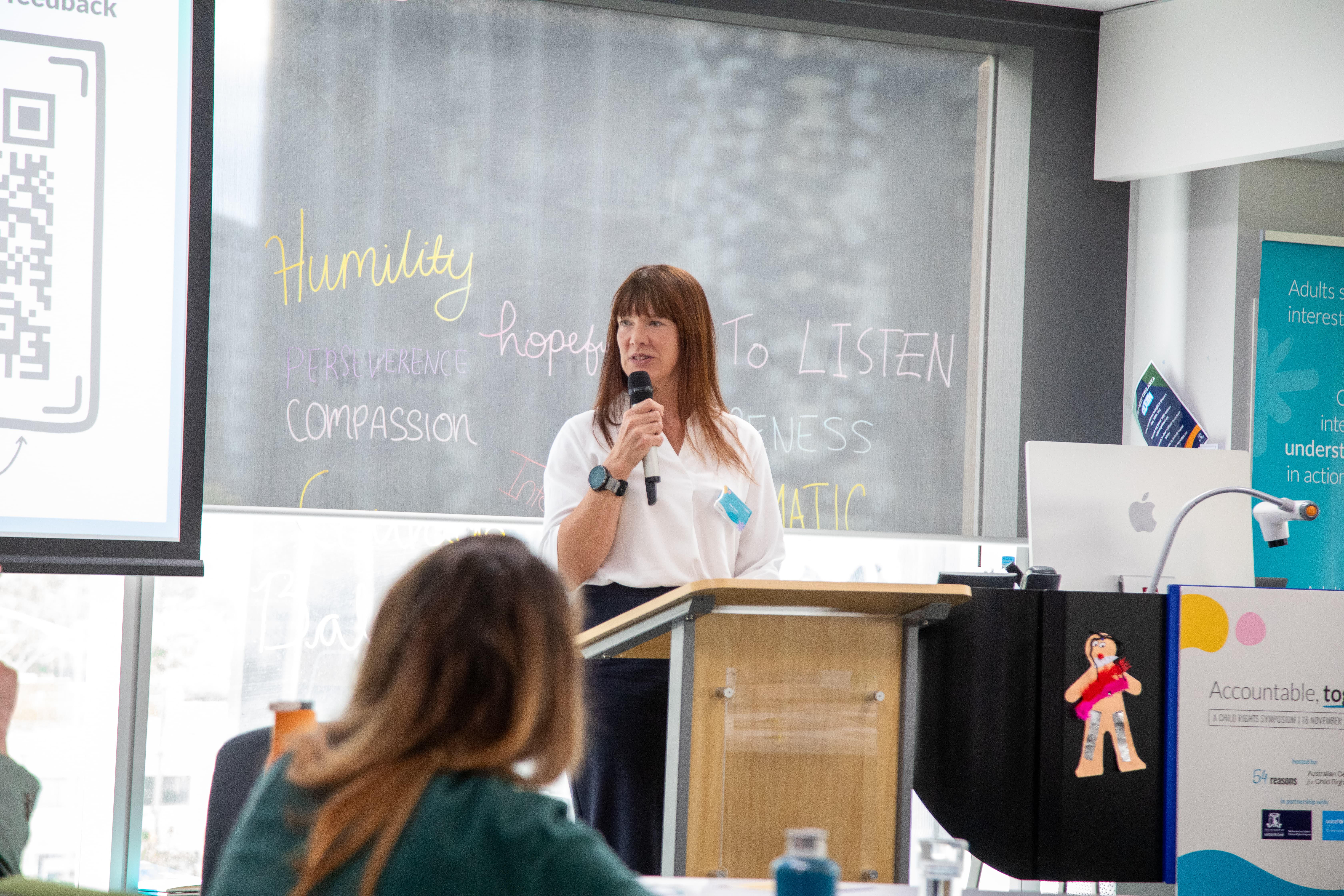
Juliet Harris, Director of Together (Scottish Alliance for Children’s Rights) and keynote speaker at our Accountable Together symposium, reflects on the day and her two week Australia-wide roadshow.
When I travelled to Australia last year to speak at 54 reasons’ national children’s rights symposium, co-hosted through the Australian Centre for Child Rights, I knew the visit was going to be ambitious. Over two weeks, the programme stretched across five states and territories, with public events and workshops, meetings with Ministers, MPs and senior officials, conversations with Children’s Commissioners, civil society organisations, funders, practitioners, and children and young people themselves.
To tell the truth, I was fairly nervous about the scale of it before I arrived. By the end of the trip, though, I felt hugely energised by what I had seen and the people I had met. Howard from 54 reasons later summed the visit up perfectly: “54 UNCRC articles brought to life.”
Embedding children’s rights in systems
One of the unexpected things the visit gave me was the chance to see Scotland differently for a while. In my day-to-day role as Director of Together, the Scottish Alliance for Children’s Rights, I spend a lot of time focused on where Scotland still falls short and the challenge of making rights real in children’s everyday lives. Being in Australia reminded me how much Scotland has built over the past two decades. It also clearly demonstrated the conditions are now in place for Australia to take a similar path to embed children’s rights systemically.
Again and again, conversations returned not simply to whether children’s rights matter, but to how rights become embedded in systems and government decision-making. It reminded me strongly of a shift we consciously went through in Scotland over recent years: moving the conversation from “if” to “how”. Less time spent arguing whether children’s rights should shape decision-making, and more time focused on how rights are embedded in policy, services, accountability and everyday practice.
People wanted to understand Scotland’s wider children’s rights ecosystem, and what has enabled its development over time.
One of the things I reflected on repeatedly during the visit was that Scotland’s progress did not emerge from any single organisation or government initiative. It was built over decades through pressure, persistence and collaboration across civil society, children and young people, Commissioners, academics, practitioners and political leaders. That broad coalition matters because lasting change requires children’s rights to be carried by a movement, not just a policy agenda.
Australia does not yet have many of the structures Scotland has developed over time. There is no national incorporation of the UNCRC, no stated plan by the Australian Government for upholding children’s rights, very limited use of child rights impact assessments and other practical tools for embedding rights across government decision-making, and far less formal children’s participation infrastructure nationally. But across civil society, academia, philanthropy, Commissioners’ offices and grassroots organisations, there was enormous energy and determination to push for something more ambitious and systemic.
Seeing children’s rights in practice
In Brisbane, I visited one of 54 reasons' refuges for victim-survivors of domestic and family violence. There, children had designed a treasure hunt to help new children explore the space and feel ownership over it. Staff showed me postcards children could fill in at any time to say what had been good, what had not worked well, or what they wanted to change, with staff then adapting the service in response.
What stayed with me was how embedded participation felt within the culture of the service itself. Children were expected to shape the environment around them, while staff were expected to listen, respond and adapt. Participation, empowerment and accountability were operating together in very practical ways.
I also saw brilliant work around communicating children’s rights in ways that feel accessible and grounded in everyday life: safety, dignity, belonging, housing, relationships and community.
I had powerful conversations with Children’s Commissioners – including Aboriginal and Torres Strait Islander Children’s Commissioners – about advocacy for children who are often furthest away from their rights. I heard deep concern about punitive approaches to youth justice, including the age of criminal responsibility remaining at 10 in most states and the overrepresentation of Aboriginal and Torres Strait Islander children in detention.
What I appreciated throughout those conversations was the strong sense that children’s rights cannot be separated from wider social and economic questions. Many people I met spoke about poverty, housing, inequality, racism and social exclusion as children’s rights issues, not parallel policy concerns. That whole-system thinking felt important and familiar to our work in Scotland.
Children’s participation driving systems change
There was great interest in how children and young people have co-led efforts across Scotland’s journey to embed children’s rights, including the successful campaign to incorporate the UNCRC into Scots law and through participation structures such as the Children’s Parliament and Scottish Youth Parliament. There was clear recognition of adults’ responsibility to listen and deeply engage with children’s views and expertise.
I also had a number of conversations about participation across huge geographical distances. In Scotland, we often struggle to ensure participation opportunities genuinely include children living in rural and island communities. In Australia, those challenges exist on an entirely different scale, with children and young people sometimes living thousands of miles apart and across different time zones.
The conversations reinforced for me how much thought, creativity and infrastructure meaningful participation requires in any country. I came away hugely impressed by the determination of people trying to make sure children and young people are heard, regardless of geography.
A coiled spring
The visit reinforced how quickly learning is now flowing between Scotland and Australia in both directions. People I met during the trip have already travelled to Scotland to learn more about work with children who have experienced out-of-home care and Scotland’s approach to tackling child poverty. At the same time, organisations and children in Scotland are increasingly looking to Australia to understand the impact of social media restrictions on children’s rights and what lessons can be learned internationally.
By the end of the trip, I left feeling like Australia’s children’s rights community was a coiled spring, full of energy, alliances, ideas and readiness for change.
Scotland has built important structures and accountability around children’s rights over many years, and demonstrated the benefits of upholding children’s rights. Australia has an extraordinary movement of people pushing hard towards systemic reform. Bringing those things together feels incredibly powerful.
I have a feeling Scotland is going to learn just as much from Australia over the next few years as Australia is learning from Scotland.
Listen now