In Our Best Interests: poster set
Six display posters that bring children’s own words about care and safety into the places where adults make decisions about their lives.
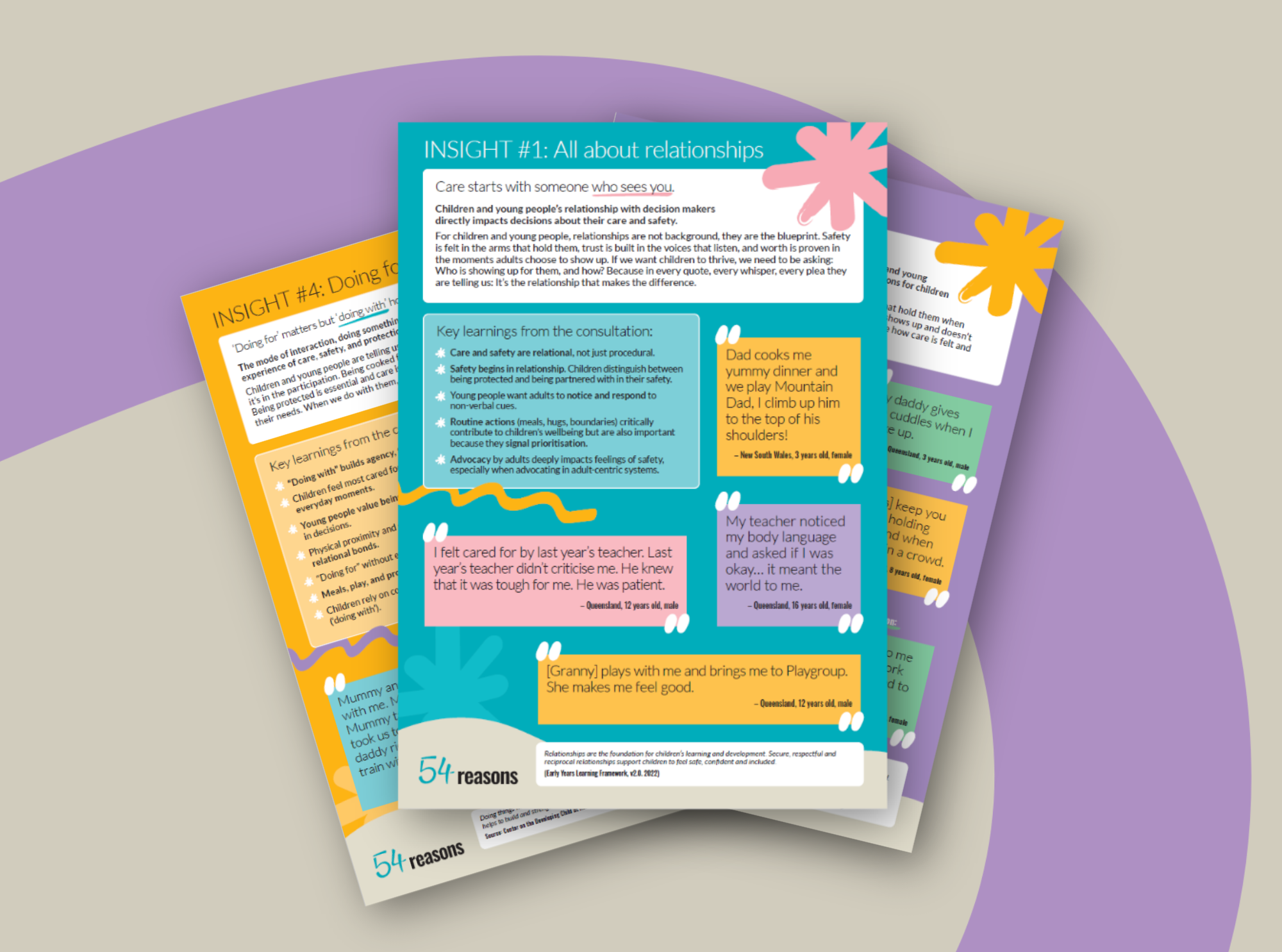
Children have trusted us with what helps them feel safe and cared for. These posters keep their voices visible every day, in services, staff rooms, offices and community spaces.
The In Our Best Interests poster set is drawn from our national consultation with children and young people on Article 3 of the UN Convention on the Rights of the Child: their right to have adults act in their best interests. It’s designed for practitioners, team leaders, educators and anyone who wants a daily reminder of what children have told us matters most. On each poster, you’ll find:
- a key insight from the consultation, in a single clear headline,
- key learnings about what care and safety look like to children,
- children’s and young people’s own words, from early years to teens, across Australia, and
- supporting evidence from trusted early childhood and child development sources.
Six posters in the set
- Overview: What acting in children’s best interests looks like to them, and how we listened
- Insight 1 All about relationships: Care starts with someone who sees you
- Insight 2 More than talk: Care is felt, not just spoken
- Insight 3 Making space: Presence is protection
- Insight 4 Doing for vs doing with: Both matter, but doing with honours agency and connection
- Insight 5 Stronger together: Listening to children is in their best interests
Ways to use the posters
Display the full set as a reminder of what children need from the adults around them. You can also pick one insight to focus on in a team meeting, supervision session or practice reflection. The posters work well alongside the practice companion, which turns each insight into simple things to try in your work with children.
Read the full report
The posters are a snapshot. For the complete findings, the practice companion and our child- and youth-friendly reports, visit the In Our Best Interests consultation report page. Read the report →