Trust, Stability and Safety: what children need after violence
Trust, Stability and Safety shares what 17 children and young people told us about seeking help after domestic and family violence, and what needs to change.
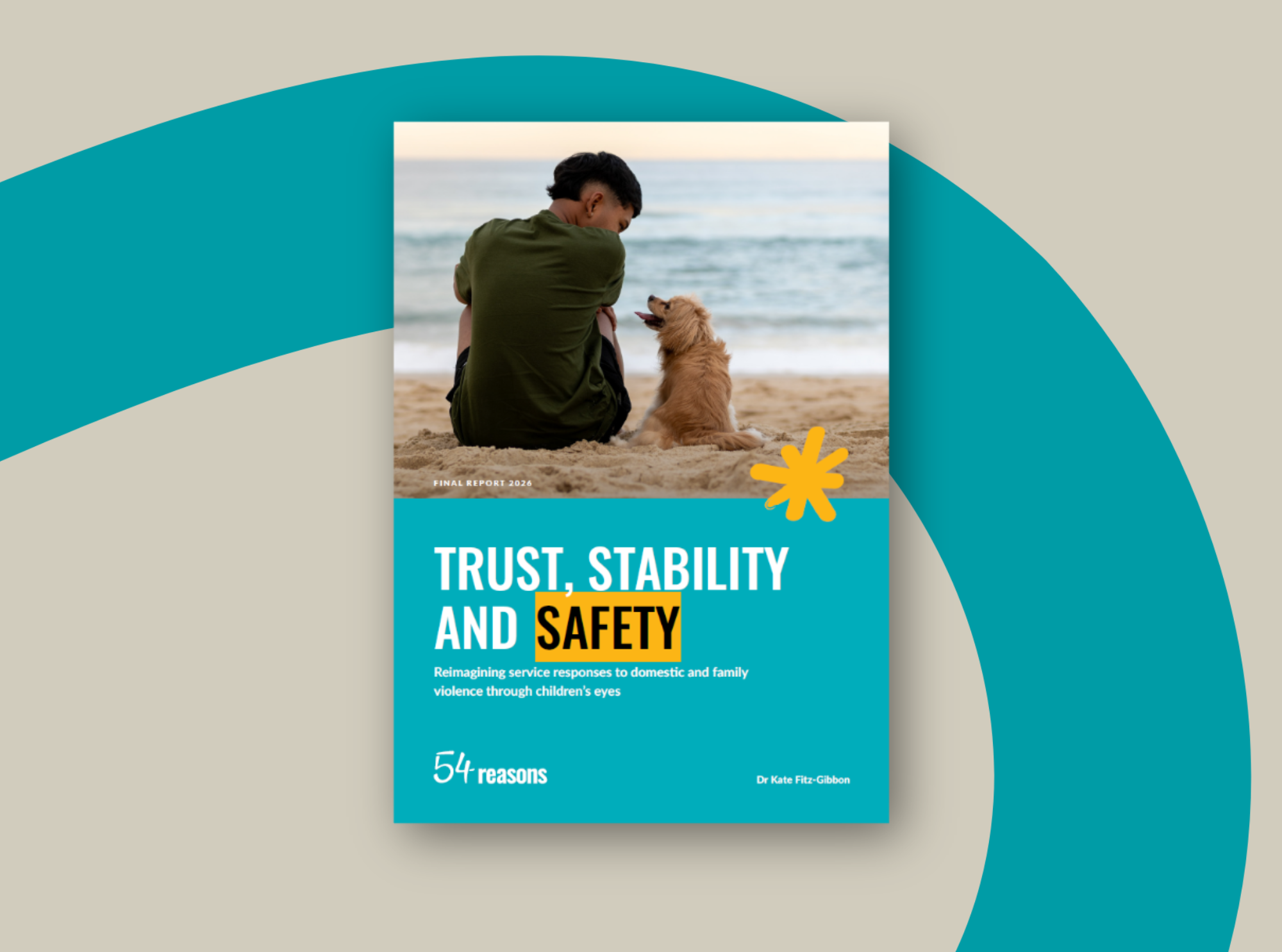
Australia now recognises children as victim-survivors of domestic and family violence in their own right. But very few studies have asked children themselves, especially those aged 10 to 14, what it’s like to seek help. Trust, Stability and Safety puts their voices at the centre.
Commissioned by 54 reasons and authored by Kate Fitz-Gibbon, Trust, Stability and Safety is a practical resource for practitioners and service providers, schools and educators, housing and crisis accommodation providers, and policymakers. In it, you’ll find:
- what safety, trust and stability mean to children, in their own words
- insights from 17 child victim-survivors across Queensland, Western Australia and Victoria, alongside three 54 reasons practitioners
- key findings on being believed, finding help, staying at school and staying connected to the people who matter
- practical opportunities to strengthen crisis, housing, education and recovery responses, and
- what the findings mean for national policy, including the Second Action Plan (2027–2032).
Children didn’t ask for anything extraordinary. They asked to feel safe, be believed and stay connected, and they told us exactly how adults can help.
What children and young people told us
- Safety is relational. A safe home is about the people in it: adults who care, routines you can count on, and support when you need it.
- Trust is built through action. Many children’s first disclosures were met with disbelief or inaction. Adults earn trust by believing children and following through.
- Stability supports recovery. Moving again and again between temporary homes disrupts children’s schooling, relationships and sense of safety.
- Children need to know where to go. There’s no go-to place for children to find help, and some didn’t recognise what was happening to them as abuse.
- School can be a lifeline. Trusted school staff, specialist counselling and relevant Respectful Relationships Education can help children speak up and get support sooner.
- Connection protects. Friends and family offer comfort and stability, but moving house and school often cuts these ties.
- Recovery is everyday life. For children, healing looks like feeling safe, going to school, seeing friends and getting to be a kid
From listening to action
What children shared in this study helped shape From Recognition to Action, our submission to the Second Action Plan, developed with more than 200 stakeholders across Australia. Read Trust, Stability and Safety to hear what children told us. Then read From Recognition to Action for the 20 actions governments can take now.
Explore From Recognition to Action →
Our promise to children and young people
Children and young people took part in this research on the promise that we would take their experiences seriously. We’ve made a youth-friendly summary so they, and other young people, can see what we heard and what happens next. We hope families, educators and others find it useful too.